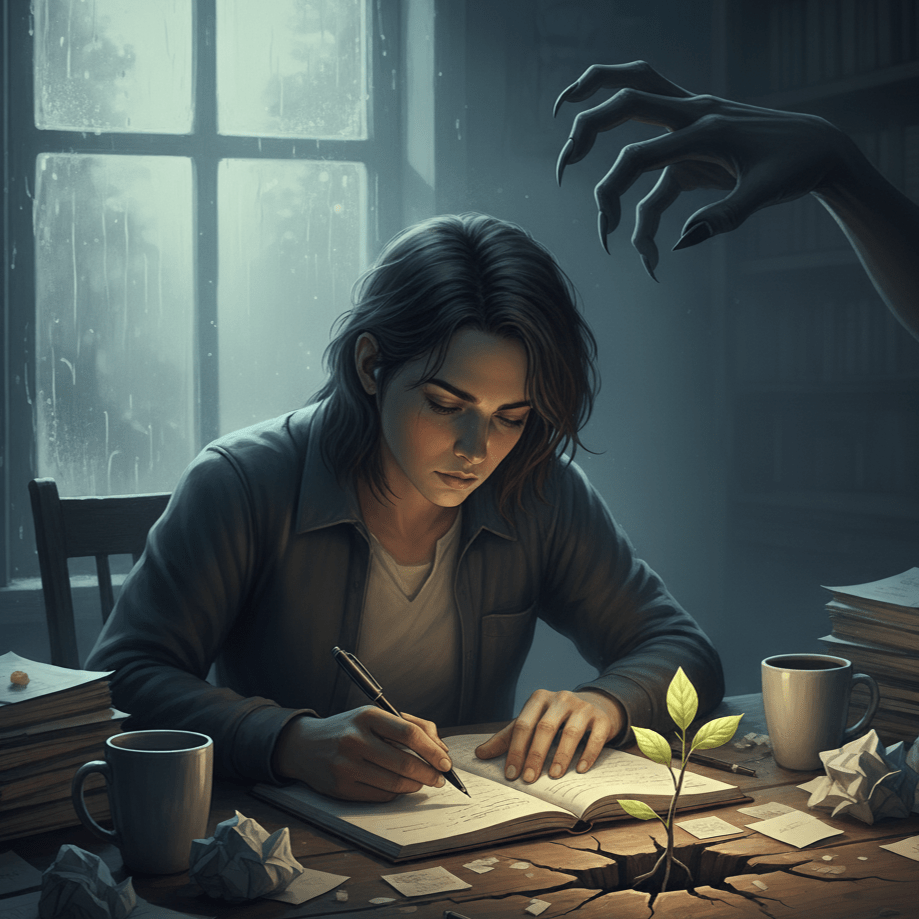
In the face of constant criticism
As writers, we expect a certain level of criticism, and we even welcome it to a point, because we understand that outside eyes can reveal things we miss. Yet we also know that every critique arrives with the unmistakable stamp of a reader who believes their perspective represents a universal standard.
We sit through workshops where people speak with the confidence of seasoned experts, and we catch ourselves nodding while recognising that half the comments come from personal preferences that have very little to do with our work. We understand that these preferences are often shaped by whatever those readers happened to like last month.
We accept that a passage described as innovative by one reader will be described as confusing by another, and we see that this disparity says more about their reading habits than our writing choices. We listen as people talk over one another because they want to sound authoritative, and we understand that the loudest voices usually belong to the people who formed their opinions before they finished the second page.
We sit quietly when the room grows quiet, and we feel the silence press harder than any critique, because we know that silence communicates disinterest even when it arrives accidentally. We wait for emails that will either contain paragraphs of detailed commentary or nothing more than a brief “no, thank you,” and we learn that both versions can sting with the same sharpness, because both remind us that our work exists in a space we can’t fully control.
The reality of rejection surfaces early in most writing careers, and it maintains an unremarkable consistency that rarely improves, because we keep sending queries to people who don’t have time to read them, and we keep hoping for a response that isn’t typed from a saved template.
We submit manuscripts after revising them so many times that we can recite whole sections from memory, and we know that many gatekeepers will skim the opening paragraph and decide within seconds that the project doesn’t align with their goals for the season. We read the form letters that thank us for our submission while informing us that the work isn’t a fit, and we recognise the slight variations in language that agents use to create the illusion of individual attention.
We keep track of which agents send polite rejections and which don’t respond at all. We understand that silence has become an acceptable part of the process, even though it leaves us waiting for months without any clarity. We remind ourselves that every writer we admire endured the same cycle, and we acknowledge that their success depended on luck as much as effort.
We know it’s because the publishing system prioritises timing and trends even when it insists that quality drives every decision. We continue submitting our work because we don’t see an alternative path toward publication, and we push forward because the only other option would involve abandoning projects that matter deeply to us.
The emotional impact develops exponentially as we move through this process. It becomes noticeable in the way we approach new drafts, because we hesitate before starting projects that feel ambitious. We hesitate because we can already imagine the potential critiques before we write the first sentence. We sit at our desks and question whether anyone will take the work seriously, and we question whether the rejections we received reflect a pattern we can’t see.
We wonder if there’s an invisible flaw that we haven’t identified. We hear people insist that writers should grow thicker skin, and we try not to laugh at the suggestion, because the same people who give this advice often struggle to handle ordinary feedback in their own work. We continue writing even though exhaustion settles in after too many failed submissions, and we continue because quitting feels more painful than continuing.
We experience moments when the pressure becomes heavy enough to slow our progress, and we experience these moments quietly, because we know that discussing them rarely helps. We hold onto small victories like a positive comment in a workshop or a brief encouraging line in a rejection, and we do this not because we’re sentimental but because the process offers so few clear affirmations.
Reframing criticism and rejection becomes necessary if we want to keep writing without collapsing under the accumulated weight of feedback. We learn to examine each critique for its usefulness rather than its tone. We acknowledge that some critiques highlight real issues in structure or clarity, and we address those issues because improving the work serves our goals. We ignore critiques based on personal preference because they don’t help us shape the story we want to tell.
We treat rejection as a filtering mechanism that removes agents and editors who wouldn’t advocate for the manuscript with enthusiasm, and we accept that this filtering process, while discouraging, protects the work from indifference. We remind ourselves that the publishing world contains a wide variety of tastes, and that a rejection from one agent doesn’t predict a rejection from another. We remember that many successful books spent years in submission before anyone paid attention.
We regain a sense of control when we choose our next steps, and we regain it when we decide how to revise, when to submit again, and when to set a project aside temporarily. We continue writing for reasons that rarely sound inspirational when spoken aloud, and we continue because we feel an internal push that doesn’t fade simply because the world responds with indifference.
As we navigate this landscape, we develop a more realistic understanding of our relationship to criticism. We recognise that we don’t need to absorb every opinion that comes our way. We learn that our responsibility as writers involves deciding which voices deserve attention, and we accept that many critiques emerge from impatience, misunderstanding, or personal taste that doesn’t align with our goals.
We maintain respect for thoughtful readers who engage with the work carefully, and we prioritise their insights because their comments help us address issues we may have missed. We learn that we don’t need to defend every choice we make, and we understand that responding to criticism doesn’t require surrendering our creative instincts.
We grow comfortable acknowledging that some readers won’t enjoy our work, and we accept that reality without interpreting it as a personal failure. Usually.
On the subject of rejection, we recognise that its impact diminishes slightly when we view it as part of a long-term process rather than a final verdict. We remind ourselves that professional success rarely arrives quickly or easily. We track submissions with the kind of methodical attention that outsiders might find tedious, and we understand that this tracking helps us stay organised in a system that offers little structure. We learn to pace our emotional investment in new submissions, and we protect ourselves by focusing on the writing itself rather than the unpredictable responses that follow.
Through all of this, we develop a resolve that doesn’t resemble optimism so much as persistence. We continue writing because the work matters even when the external rewards remain scarce. We recognise that the writing life doesn’t promise fairness or clarity, and we accept that uncertainty remains constant regardless of experience or talent.
We find a strange kind of stability in the act of returning to the page, and we rely on this stability when the inbox delivers its predictable disappointment. We continue because we want to see the work exist in its final form, and we continue because we believe that finishing a project holds value even if no one else acknowledges it.
In the end, we deal with criticism and rejection in the only way that makes sense to us, and we move forward with a mixture of annoyance and determination. We trust that our persistence will lead somewhere, even if the timeline remains impossible to predict. We stay in the process because stepping out of it would feel worse than enduring its frustrations.
We accept that the writing life demands patience, stubbornness, and an ability to keep going long after enthusiasm has faded. We write because writing satisfies something internal that doesn’t rely on approval, and we keep submitting because hope lingers even after disappointment accumulates, and we continue simply because we haven’t found anything else that feels as necessary.






 Lia Declan's Musings
Leave a comment